











The Transformative Impact of Automation on the Future of Plate Bending Machines
Release Time:
2025-11-03

The Transformative Impact of Automation on the Future of Plate Bending Machines
Table of Contents
- 1. Introduction to Plate Bending Machines
- 2. The Importance of Automation in Manufacturing
- 3. Automation in Plate Bending Machines
- 4. Benefits of Automation in Plate Bending
- 4.1 Enhanced Efficiency and Productivity
- 4.2 Improved Precision and Quality Control
- 4.3 Safety Enhancements in the Workplace
- 5. Future Trends in Plate Bending Automation
- 6. Case Studies: Success Stories in Automation
- 7. Challenges and Solutions in Automation
- 8. Conclusion
- 9. FAQs
1. Introduction to Plate Bending Machines
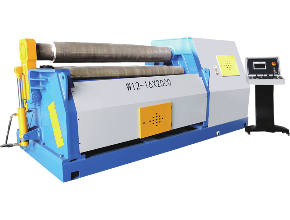
Plate bending machines are pivotal in the manufacturing industry, particularly for creating components used in various applications, from structural supports to intricate machinery parts. These machines bend metal plates to precise angles and shapes, playing a crucial role in diverse sectors such as construction, automotive, and aerospace. As technology progresses, the integration of automation into these machines is transforming the way manufacturers operate, enhancing productivity and precision while reducing labor costs.
2. The Importance of Automation in Manufacturing
In today’s fast-paced manufacturing environment, automation is not just an option; it is a necessity. The ability to automate repetitive tasks increases efficiency, reduces human error, and enables workers to focus on higher-value activities. Furthermore, automation facilitates greater scalability, allowing businesses to adapt quickly to market demands without compromising on quality or safety.
3. Automation in Plate Bending Machines
The incorporation of automation in plate bending machines signifies a notable shift in manufacturing capabilities. Automated systems can perform complex bending tasks with minimal human intervention, ensuring faster turnaround times and consistent quality.
3.1 Types of Automation in Bending Machines
There are primarily two types of automation used in plate bending machines: fixed and flexible automation. Fixed automation is designed for high-volume production, where the processes are standardized. In contrast, flexible automation allows for varying production runs, accommodating different product specifications and sizes without significant downtime.
3.2 Key Components of Automated Bending Systems
Automated plate bending systems typically include:
- **Computer Numerical Control (CNC)**: This technology allows for precise control over the bending process, enabling complex shapes to be created with high accuracy.
- **Robotic Arms**: These are used to handle materials and perform repetitive tasks, enhancing efficiency.
- **Sensors and Cameras**: Integrated sensors provide real-time feedback, ensuring that the bending process adheres to specifications, while cameras can monitor quality in real-time.
4. Benefits of Automation in Plate Bending
The transition to automated plate bending machines offers myriad advantages that can significantly improve operational performance.
4.1 Enhanced Efficiency and Productivity
Automated bending machines can operate continuously without breaks, significantly increasing throughput. This efficiency translates to higher production rates, allowing businesses to meet market demands more effectively.
4.2 Improved Precision and Quality Control
Automation minimizes human error, resulting in higher precision in bending processes. Consistent accuracy ensures that each product meets the required specifications, reducing the risk of defects and improving overall quality.
4.3 Safety Enhancements in the Workplace
The use of automated systems reduces the risk of workplace accidents. Machines can perform dangerous tasks that would traditionally require human labor, minimizing exposure to hazardous conditions and ensuring a safer working environment.
5. Future Trends in Plate Bending Automation
As technology continues to evolve, we can expect several trends to shape the future of automation in plate bending machines. These include:
- **Artificial Intelligence (AI)**: AI algorithms can optimize bending processes by analyzing data and predicting outcomes, leading to even greater efficiency.
- **IoT Integration**: The Internet of Things (IoT) enables machines to communicate with each other, allowing for more streamlined operations and real-time monitoring.
- **Additive Manufacturing**: The combination of bending and additive processes will allow for more complex geometries and innovative designs.
6. Case Studies: Success Stories in Automation
Several companies have successfully integrated automation into their plate bending processes, resulting in remarkable improvements. For instance, a leading construction equipment manufacturer adopted CNC bending machines and reported a 30% increase in production rates and a significant reduction in material waste. Another case involved an automotive parts supplier that implemented robotic systems, leading to enhanced precision and a decrease in labor costs by 20%.
7. Challenges and Solutions in Automation
Despite the advantages, transitioning to automated plate bending systems presents challenges. These include high initial investment costs and the need for skilled personnel to operate complex machinery. However, these challenges can be addressed through:
- **Gradual Implementation**: Companies can start with a hybrid system, combining manual and automated processes until they are ready to fully transition.
- **Training Programs**: Investing in employee training ensures that staff are equipped to handle advanced technologies.
8. Conclusion
The integration of automation into plate bending machines marks a significant advancement in manufacturing technology. As industries continue to embrace these innovations, the benefits of increased efficiency, precision, and workplace safety become increasingly evident. Companies that invest in automation are not only enhancing their production capabilities but are also positioning themselves for long-term success in a competitive market.
9. FAQs
1. What is a plate bending machine?
A plate bending machine is a type of machinery used to bend metal plates into specific shapes and angles, essential in various manufacturing processes.
2. How does automation improve plate bending machines?
Automation enhances plate bending machines by increasing efficiency, improving precision, and reducing labor costs, ultimately leading to better quality control.
3. What are the key components of an automated plate bending system?
Key components include CNC technology, robotic arms, and integrated sensors, which work together to ensure accurate and efficient bending processes.
4. What are the challenges of implementing automation in plate bending?
Challenges include high initial investment costs and the requirement for skilled operators. However, these can be managed through gradual implementation and training programs.
5. What future trends can we expect in plate bending automation?
Future trends include the integration of AI, IoT, and additive manufacturing, which will further revolutionize the capabilities of plate bending machines.
This comprehensive exploration highlights that embracing automation in plate bending will not only streamline processes but also foster innovation in manufacturing.
Previous Page:
Related News
NanTong HAVI CNC Machinery Co., Ltd.
Phone/WhatsApp: +86 17606524813
Address: Libao Development Area,HaiAn jiangsu China